
Introduction
Hi, and welcome to the first AmigaOS 4 Monthly Roundup in 2026! Thank you for visiting my blog. 🙂
I’ve implemented a few changes thanks to suggestions from readers. The most important one this time comes from Erikorh in the Amigans channel on Discord. He suggested headlines for each news item. I thought that was a great idea, so in this roundup I’ve given this a try. I hope this will make the text easier to navigate than previously. Thanks Erikorh!
If you have feedback of any kind concerning these roundups, please contact me through the Amigans forum or on the Amigans Discord. 🙂
Now, let us dive into the news.
Software News
Hollywood 11: Coderise
The biggest news in January was probably the release of Hollywood 11: Coderise. Here is the official press release from Airsoft Softwair.

Hollywood 11: Coderise is a massive update with lots of new features, optimizations and bug fixes. The most important new feature is that Hollywood 11 finally introduces a modular build system which will only link the libraries actually required by a script to the compiled program. This can drastically reduce executable sizes and is especially important on Amiga systems where memory is often limited. Hollywood 11 finally makes it possible to compile programs that fit on a single 880kb disk and run on a vanilla A1200! The new modular build system is made possible by a brand-new subsystem called Miniwood which, in contrast to Hollywood, allows scripts to only link the libraries actually required by the script to the output executable. Using Miniwood doesn’t only have advantages for Amiga users but also for users of other platforms: For example, if scripts don’t decide to load the display library, the program will also work on systems without X11, e.g. on pure terminal servers which was previously impossible.
Of course, the introduction of Miniwood isn’t the only new feature in Hollywood 11. There are many other exciting new things in Hollywood 11. Here are just a few of them:
- introduction of Miniwood to massively reduce executable sizes
- sound stream export is now possible
- lots of new AmigaOS 3.2 features now supported
- new AmigaOS-specific extensions like backdrop windows
- support for the Linux arm64 platform
- several improvements concerning layer grouping
- audio recording support in different formats
- samples can be extracted from music streams
- optimized for Hollywood Designer 7
- much more convenient capture of console output
- much more effective compressor for smaller executables
- lower memory consumption (important on classic AmigaOS)
- tray menu support
- monolithic compilation now supported for macOS arm64 systems
- console mode supported on macOS as well now
- GDK support on Linux
- great enhancements for Android (scoped storage and MediaStore support)
- implemented several new plugin interfaces
- ready for at least 3 new Hollywood 11-exclusive plugins
- over 100 new pages of PDF documentation, 1380 pages altogether!
- lots of other changes, optimizations and bug fixes
Hollywood 11 is the ultimate Multimedia experience and a must-have for all creative people. Hollywood is available on CD and as a download version. Both versions include Hollywood for all supported platforms. Buying Hollywood gets you a single-user license for all 17 platforms supported by Hollywood. If you already own Hollywood, you can buy a discounted upgrade version.
Hollywood is the ultimate bridge between all the different AmigaOS compatible platforms and the other three modern desktop systems, Windows, macOS, and Linux! Additionally, Hollywood also supports the Android and iOS platforms. A truly unique feature is the ability to cross-compile native executables for many different platforms including: AmigaOS3, AmigaOS4, WarpOS, MorphOS, AROS (x86), Windows (x86, x64), macOS (x86, x64, arm64, ppc), Linux (x86, x64, ppc, arm, arm64), and Android/iOS with optionally available add-ons. You don’t even have to own these platforms in order to compile executables for them. It’s enough to run Hollywood on one of the supported platforms and then compile programs for all the others! Only Hollywood makes it possible. If you want to learn more about Hollywood, please visit the the official Hollywood portal which also has a forum for all questions concerning Hollywood.
All this makes Hollywood The Cross-Platform Multimedia Application Layer. Join the Multimedia revolution and get your personal copy of Hollywood 11: Coderise now!
This release was brought to you by Airsoft Softwair – the hardest working men in code business.
https://www.hollywood-mal.com/
https://www.hollywood-mal.com/purchase.html
Hollywood Syntax for Annotate & GEdit
On Aminet, we can find Hollywood Syntax for Annotate & GEdit by Nathan Hesterman.
https://os4.aminet.net/package/text/edit/AnnotateHollywoodSyntax
Included are Hollywood syntax highlighting files for Annotate and GEdit. They correspond with Hollywood version 11.0.
The Cubic IDE add-on for Hollywood 11.0
The Cubic IDE add-on for Hollywood 11.0 is now available. According to the readme:
“This add-on allows you to use Cubic IDE as an IDE for Hollywood. The complete Hollywood command set is imported into Cubic IDE so you’ll get syntax highlighting, quick command information, hotkey links to the documentation for command under cursor, function list, direct access to the compiler, auto complete and intellisense functionality and much more.”
Hollywood 11 SDK, Hollywood Player 11, UltraEdit Wordfile
The Hollwood 11 SDK can be downloaded from OS4Depot. This package contains all the necessary information and files to write your own Hollywood plugins. Plugins can greatly enhance Hollywood’s functionality.
Here is also the Hollywood Player 11.0. As stated in the readme:
“(…) is a program which can run applets created by the full version of Hollywood. Applets are compiled Hollywood scripts and can contain data sections as well. The advantage of the Hollywood Player is that people who want to publish their own projects can now simply save them as Hollywood applets, and these applets can then be started on every platform that the Hollywood Player supports.”
UltraEdit Wordfile
Last, but not least, here is the UltraEdit wordfile for Hollywood 11:
AmiSSL
Version 5.26 of AmiSSL has been released! As mentioned in earlier editions of the AmigaOS 4 Monthly Roundup, the AmiSSL project is a collaborative effort to develop a port of OpenSSL in a shared library for Amiga-based systems. It is a must-have if you use AmigaOS 4 to browse the web!
https://os4.aminet.net/package/util/libs/AmiSSL-v5-OS4
New Iconset and Wallpapers from McFly
McFly has created a new set of icons. This one contain folders and icons for 44 different games. Rise of the Triad, Nitro Racers, Warzone 2100, and many more. They look very nice in my opinion! 🙂 The icons can be found on his website:
http://g-a-p.me/inside/icons.html
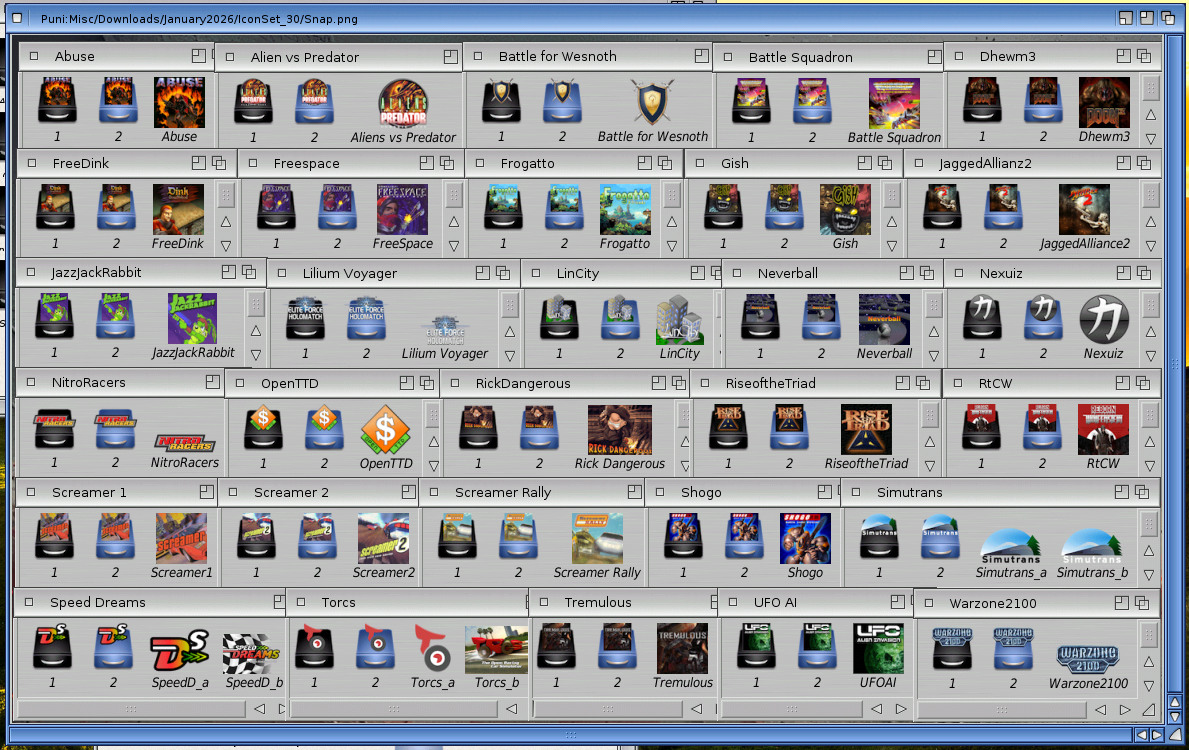
He also released a package consisting of six abstract wallpapers in 1920×1080 resolution. These are also available from the website above.
ReSrc4
Version 2.18 of ReSrc4 from René W. Olsen has been released. This is a portable Amiga 68k hunk file disassembler. The source code is available on GitHub:
https://github.com/rolsen74/resrc4
Gabrielle
Remember the Xena XMOS XS-1 chip from the AmigaOne X1000 and X5000? This is a multi-core microcontroller acting as a user-programmable co-processor. Joakim Nordström has released Gabrielle, a set of tools that will help you to utilize the power of the chip.
Virtual Jaguar
HunoPPC is back with an update to Virtual Jaguar. More information can be found on his website here:
https://hunoppc.amiga-projects.net/content/virtual-jaguar-amigaos4-ng
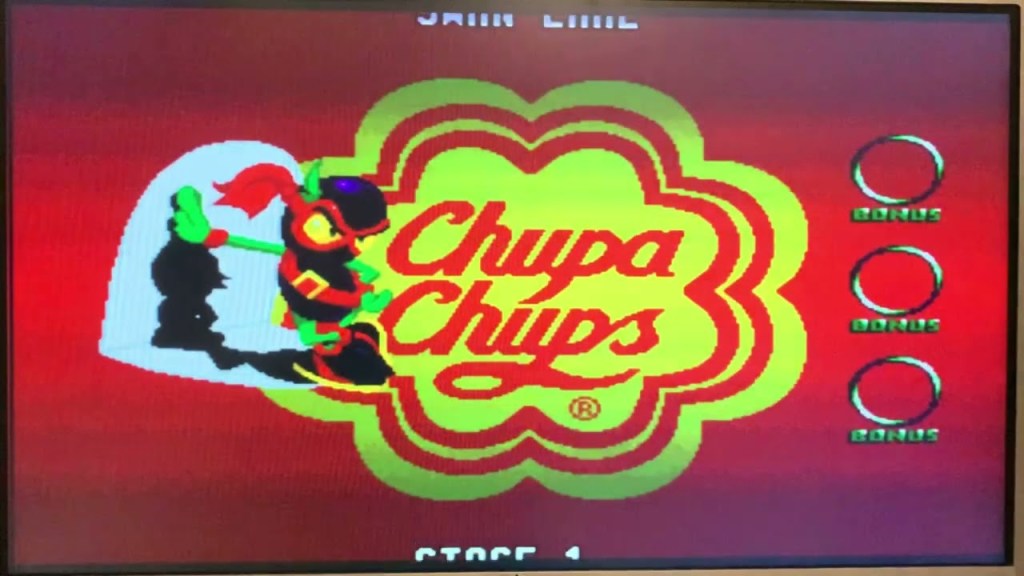
Here is a recent video showing it with SPE support for A1222.
Abuse 2025 SDL2
The port of Abuse 2025 SDL 2 has been released by HunoPPC and AOS4 fans from Mars.
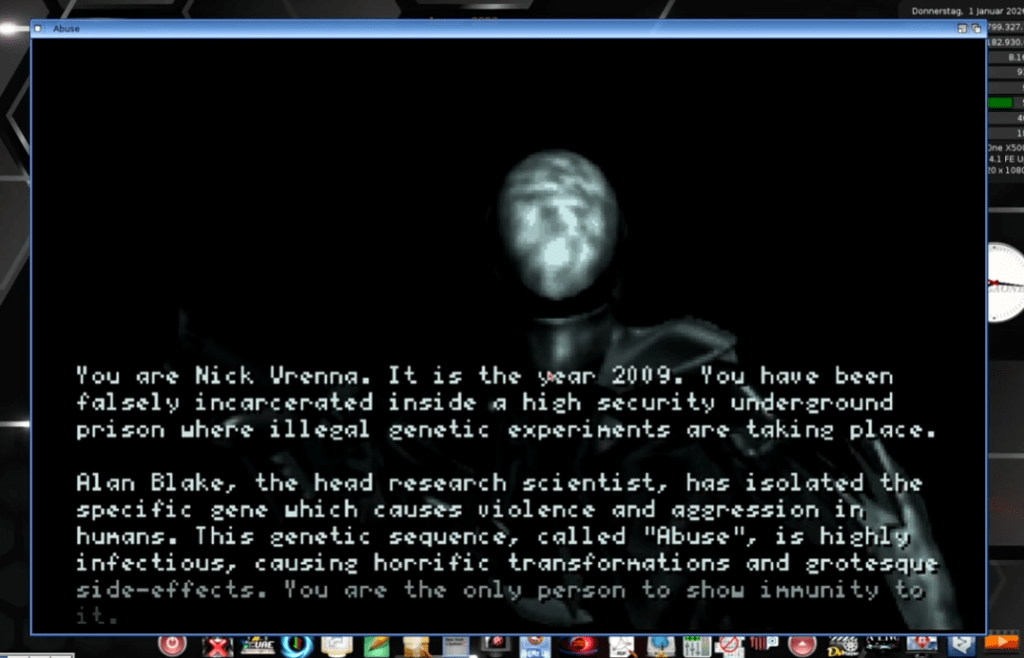
“Abuse is a great side-scrolling action game that uses a unique system to control your character. You use the keyboard to move around and the mouse to aim your gun. It works pretty well, and the game can be great fun to play, since it has nicely done graphics and sound effects, as well as many non-linear levels and powerups.”
More information about Abuse 2025 at:
https://github.com/apancik/Abuse_2025
HunoPPC will make this port later available on his project page:
https://hunoppc.amiga-projects.net
Thanks to Huno and “Os4 fans from mars” for this great port.”
Zaz
We can also read on HunoPPC’s Ko-Fi page that the port of the puzzle game Zaz has been updated:
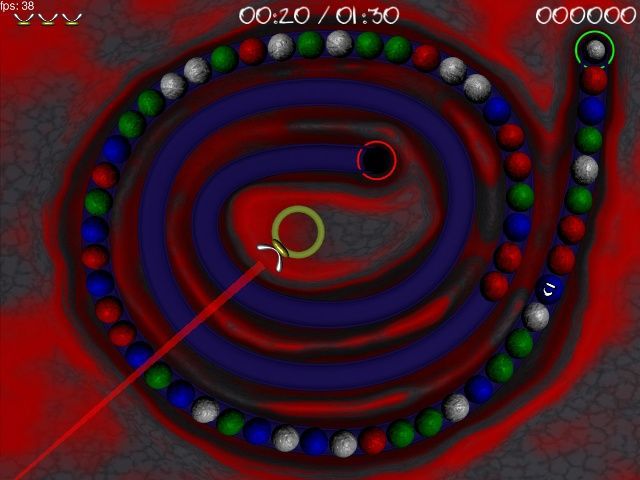
Zaz version 1.0.4 EGL, MiniGL and SPE is Out !!!
Download this on my Site and private FTP.
Thank you for thanking the donors or contributing to the donations, because without them you wouldn’t have these large-scale projects and new games. Thank you for your understanding.
Important: wav datatype is Hyperion and not A-eon, thanks
WHAT’s NEW in version 1.0.4 (compiled 18-01-2026)
- Compiled with CLIB4 GCC 6.4.0
- 3 versions
*EGL_Wrap
*SPE
*Minigl - Added 8 news sounds FX .wav
- Added code for sounds Fx with Datatype for low Cpu
- Now is threaded
- Usage Cpu on X5000/40 with EGL_Wrap is 28% (convert to a shaders)
- Usage Cpu on X5000/40 with MiniGL is 20% (native)
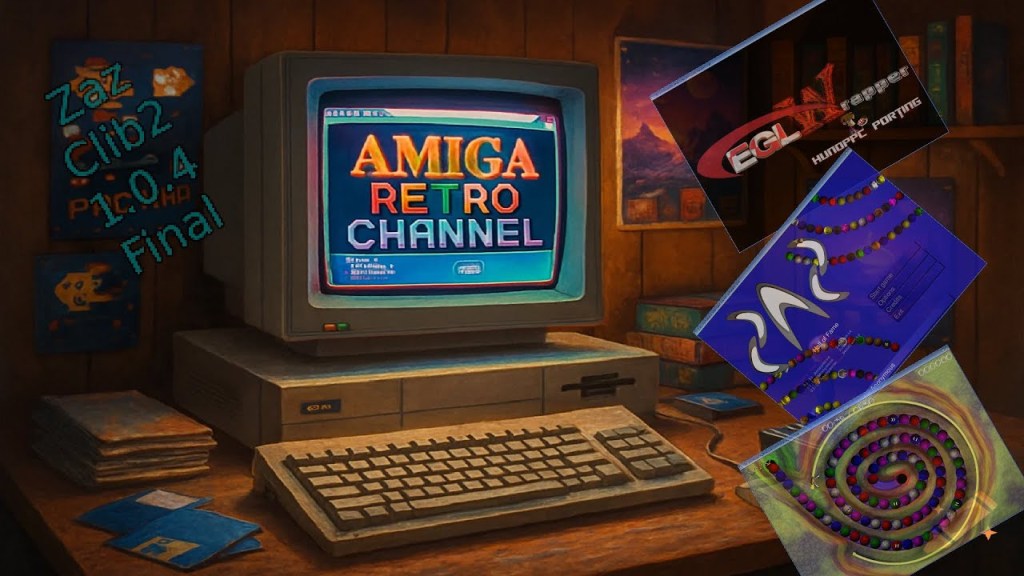
Maijestro of the Amiga Retro Channel provides us with a great video showing this game in action!
Ubek

Version 1.1.2 of the first person shooter Ubek became available on OS4Depot on January 6th. There, we can read the following:
“Ubek is a remake of a commercial fps game released for classic Amiga in 1995 by Twink Spark Soft. The main idea behind the remake is to make it convenient and pleasing to play on modern systems, while preserving 100% of the original graphics, puzzles and story.
The main programmer, author of the original and remake is Szymon Ulatowski, Marek “Smakrusg” Glogowski helped in porting the game to AmigaOS 4. In addition, musicians Albert Czochara and Remigiusz Kolasa also contributed to the sound design of the Ubek. The game’s beta tester was Rafal Chyla, who also created the icons and helped prepare the documentation.”
Features of the new version include:
- Modern high resolution, 60 fps
- 3D hardware acceleration (using GL4ES)
- Graphics improvements, including a better look for weapons or hero characters (you can switch to classic mode, which looks like the 1995 original)
- New extended music setting and better sfx effects
- Control enhancements – keyboard plus mouse or optional (tooltype option) gamepad using analog knobs
- The location of the level exit is visible on the radar
- Improvements in better weapon range and effectiveness
- Hitting enemies partially visible around corners is now allowed (in the old version, if the center of an enemy’s body was obscured by a wall, he was completely immune to hits).
- Added safeguards against accidental destruction of critical objects (e.g., keys) needed to complete a level.
- Added option to quickly save and load
- Many other minor fixes and improvements to make gameplay easier and the game better in general
The final version is now out. Here is the changelog for the release since 1.1.2:
Final
Added support gamepad for SDL3 version.
1.1.3
Added compilation using SDL3 and GLES2.
The SDL3 version supports better 48 kHz music quality and supports shaders to
help achieve the CRT monitor effect.
SDL3 version does not support gamepad
The compilation for SDL 2 uses lower quality music from the music_22k directory.
1.1.2
Added VGA and PAL mode in graphics options (pixel effect in the atmosphere of the 1995 original).
Memory Schmemory
Memory Schmemory version 1.01 has been released! This game is a remake / clone of the Amiga game with the same name created by Zooperdan (https://zooperdan.itch.io/memory-schmemory).
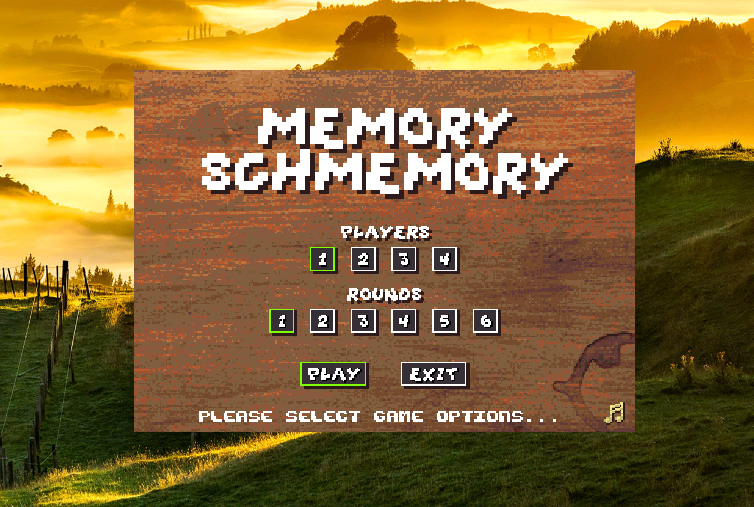
The AmigaOS 4 version was created by Achim Kern and developed using Hollywood 10. This is the classic memory game where you have to find two equal cards.
RNOEffects
Version 2.1 of the brilliant RNOEffects by jPV^RNO has been released. 🙂
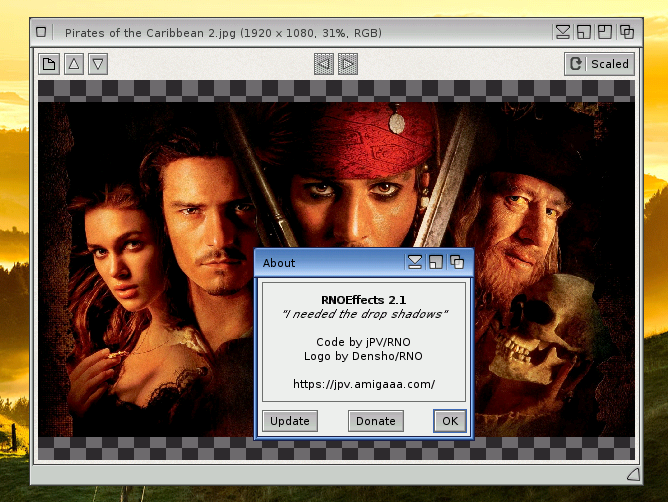
RNOEffects is an image processing program with a focus on good batch conversion options and alpha channel-based effects.
It runs on AmigaOS 4, MorphOS, AmigaOS 3 (68K/WOS), and AROS.
Version 2.1 includes the following changes:
- Added a new view mode to display images at their actual resolution in a
scrollable window area - Graphical displays are hidden during window resizing, which improves speed
and flexibility on systems that resize windows with full contents - Added the “Palette editor” tool for modifying, setting, or removing palettes
- Whole directories can be added into the batch conversion list with the Add
button or just drag’n’drop from OS windows - Batch resizing can keep the aspect ratio of an original image
- Added an option to disable redrawing during a batch conversion to speed up
the process on lower end setups - Added a progress gauge in the batch conversion window
- Zoom level can be changed in the Pixel Editor
- Pixels can’t be drawn “out-of-bounds” in the Pixel Editor window
- Palette images are converted to RGB images only when needed or requested
- Added a setting to reload saved images back into the editor to reflect
changes caused by any image conversion process during saving - Added an option to convert RGB images to palette images with Quantize effect
- Window title indicates if an image is an (A)RGB or Palette image
- Almost all effects work with palette images now, though some options may not
work exactly as with RGB images - The Clear option detects the image colour format
- The Color Picker tool shows the palette pen alongside the RGB values
- Brush and text drawing can be locked to borders/corners/centre, which makes
it easier to add watermarks, etc. to varying image dimensions - Setting co-ordinates for the Draw effect by mouse over the image can be
constrained vertically or horizontally by pressing Shift or Ctrl keys - The “j” key swaps main and buffer images (as used in DPaint and PPaint)
- Added presets for Amiga WB 1.x, 2.x, Rebel, and PeterK/IconLib palettes
- Added presets for resolutions on Resize and Crop windows, the last applied
resolution is shown as the first item in the preset list - Width and height values can be swapped in Resize and Crop windows
- A cropped image can be copied to the internal buffer instead of applying the
effect to the current image - Buffer changes are refreshed on effects that use the buffer image
- Color Picker and Area Selector tools broke some effects like elliptical crop
- Transparency level can be set on the Background effect
- Improved error handling
- Other minor fixes and changes
You can download the AmigaOS 4 version for free here:
http://os4depot.net/?function=showfile&file=graphics/edit/rnoeffects.lha
You can find more information (and downloads) on the official webpage:
https://jpv.amigaaa.com/RNOEffects/
Vault 1.2.0
George Sokianos has released version 1.2.0 of Vault.
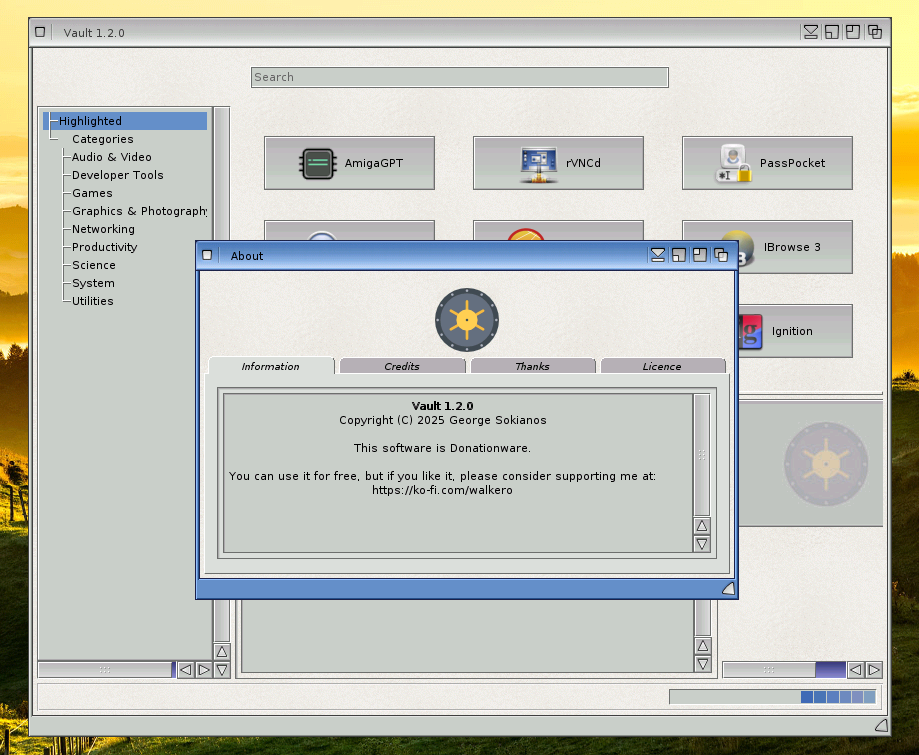
He writes as follows:
Vault is an application for AmigaOS 4.1 FE that helps users discover useful and well-tested applications for their systems, either if they are native PPC or 68k classic applications. Consider it as an application store, but with the minimal of the features.
Vault retrieves information from IntuitionBase.com and the “Featured software” section. The list of applications is the same.
Slowly, more applications will be added in the list. If someone would like to help make this list bigger, please contact me.
Please visit his Ko-Fi page for more information.
Changelog
[1.2.0] – 2026-01-18
Added
- Added a search field at the top to search for applications among all the categories
- Added a new Highlighted section that promotes some applications. This is the default view when Vault starts
- Added a Preview window, showing a bigger application image when the user clicks on the small screenshot
- Added AutoInstall script for using it with AmiUpdate
Changed
- Changed the left sidebar to have the categories in their own group
- Compiled with Hollywood v11
PolarPaint
PolarPaint is an experimental paint program made in Hollywood by Anbjørn Myren. Version 1.275 was uploaded to OS4Depot and became available on January 24th.
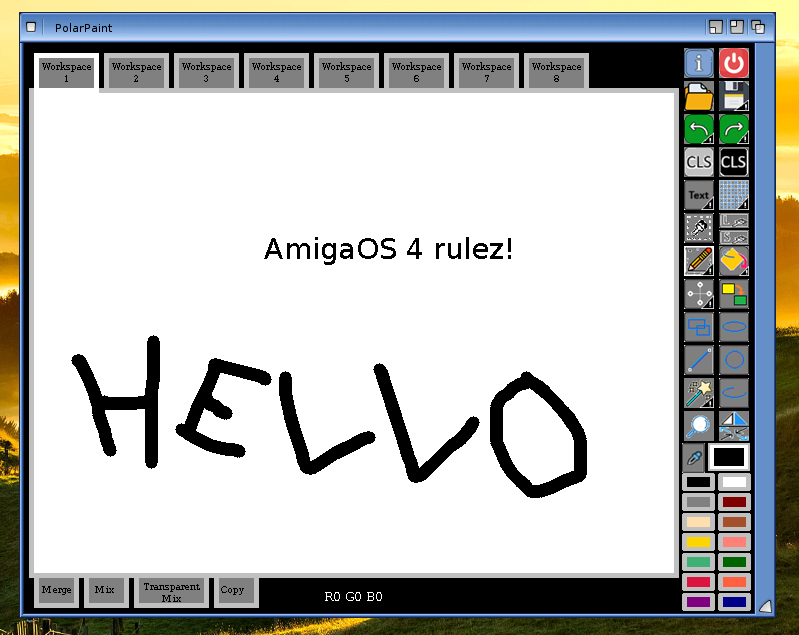
There are currently two versions available, one regular and one small. More information about changes can be found on OS4Depot.
Changes since the last release:
v75
Added spraypaint effect (same button as multidot)
Compiled with the Miniwood edition of Hollywood 11, smaller executables except for the WarpOS version whicj is yet not supported by Miniwood
This is a nice paint program with many functions. Well worth checking out!
By the way, the author has uploaded a manual for the program on Aminet. That one should come in handy!
https://os4.aminet.net/package/gfx/edit/PolarPaint_manual
Deepscan
Deepscan 1.8 lists dependencies in a binary. The utility was created by Lorence Lombardo. Deepscan was based on Megacz’s “Depstrack”, but was not translated at all, and was written entirely from scratch.
AmiArcadia
Version 36.0 of AmiArcadia for AmigaOS 4, a Signetics-based machines emulator, has been released by James Jacobs.

According to the documentation, AmiArcadia supports the following systems:
- Emerson Arcadia 2001 console family (Bandai, Emerson, Grandstand, Intervision, Leisure-Vision, Leonardo, MPT-03, Ormatu, Palladium, Poppy, Robdajet, Tele-Fever, Tempest, Tryom, Tunix, etc.) (c. 1982);
- Interton VC 4000 console family (Acetronic, Cabel, Fountain, Hanimex, Interton, Prinztronic, Radofin, Rowtron, Soundic, Voltmace, Waddingtons, etc.) (c. 1978);
- Elektor TV Games Computer (1979);
- PIPBUG- and BINBUG-based machines (EA 77up2, EA 78up5, Signetics Adaptable Board Computer, Eurocard 2650, etc.) (1977-1978);
- Signetics Instructor 50 trainer (1978);
- Signetics TWIN minicomputer (1976);
- Central Data 2650 computer (1977);
- PHUNSY computer (c. 1980);
- Ravensburger Selbstbaucomputer aka 2650 Minimal Computer trainer (1984);
- Hofacker MIKIT 2650 trainer (1978);
- Astro Wars, Galaxia, Laser Battle and Lazarian coin-ops by Zaccaria (1979-1981);
- Malzak 1 and 2 coin-ops by Kitronix (c. 1981);
- AY-3-8500/8550/8600-based Pong systems (Coleco Telstar Galaxy, Sheen TVG-201, etc.) (1976-1977);
- VTech Type-right machine (1985)
It is packed with features, far too many to list here. Examples include ReAction GUI, load/save snapshots, and windowed and fullscreen modes. Other features are CPU tracing, trainer, and drag and drop support. Additionally, it offers graphics scaling, PAL/NTSC modes, and frame skipping, among many other features!
Here is an overview of the changes since the last release:
Changes since V35.9:
Summary:
- Arcadia: added “Settings|Sprites|Transparent” option (WinArcadia only).
- Elektor: enhanced “Help|Game information…” subwindow.
- Debugger: added WARN command/toggle.
- Miscellaneous improvements and bug fixes.
If you want to download the program, it can be found on OS4Depot:
Theme List
Theme List is a utility made by Sandro Barbagelata. The program requires a directory to scan for any theme, indifferently it is for OS4 or AROS or MOS. Themes can be mixed, they will be recognized and treated consequently. The graphic output can be reviewed on the screen and saved on a file.
AIChat
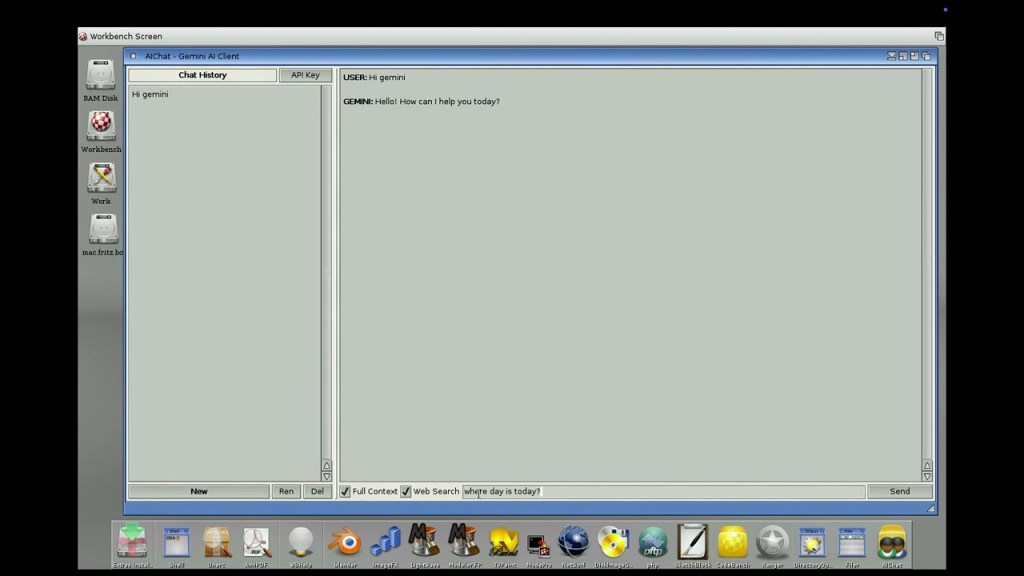
Luca De Giovanni has released version 1.1 of a program called AIChat.
This is a native MUI interface for Google’s Gemini AI. It allows you to chat with the Gemini Flash model direction from the AmigaOS 4 desktop.
Features:
- Native MUI Interface (Multithreaded, non-blocking)
- Sidebar Chat History (JSON-based, persistent)
- Automatic saving and loading of multiple conversations
- Google Search Grounding (Live Web Search integration)
- Manual Chat Renaming and Deletion
- Gemini 3.0 Flash Preview support
- Built-in GUI for API Key configuration (ENVARC: support)
- Markdown rendering (basic)
- Fast and lightweight
- Proper UTF-8 to Latin-1 character conversion
A video of the program running can be found here on YouTube:
SDL 3
A new update to SDL3 is out, more precisely version 3.4.0.
More information is available here:
Sfputc
Lorence Lombardo has released sfputc, a scrip implementation of fputc.
Omanko
Templario is back again, and this time with a program called Omanko version 1.30. This is a small utility that you can use to test MD5, CRC32 and SHA checksums.
Misc
Moonlight by Helge Kvalheim
The Norwegian Amiga musician, Helge Kvalheim, has been busy lately. His latest song is called Moonlight. 🙂
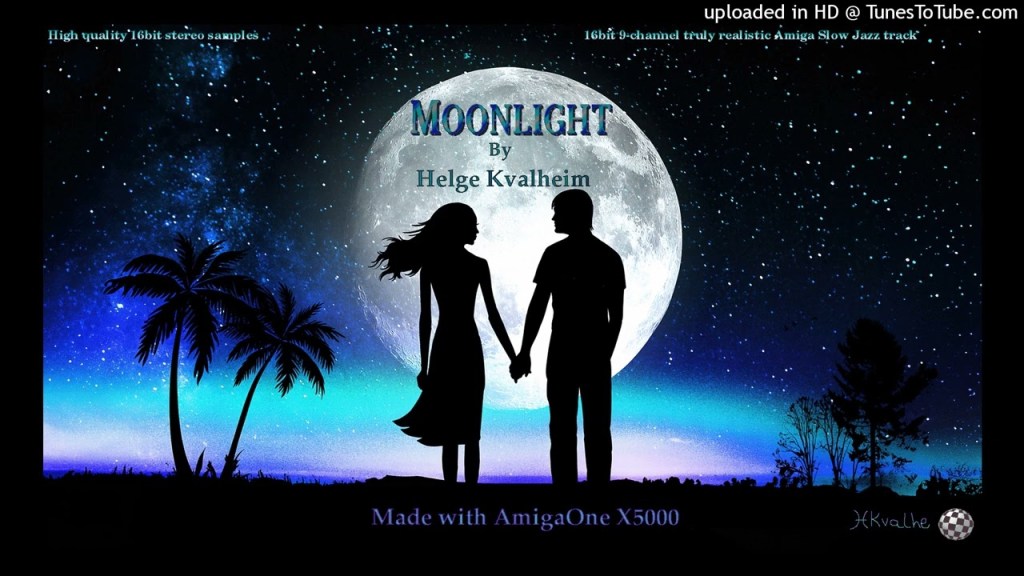
You can find more music on his YouTube channel, but also on Aminet, for example. Here is a link to the one above:
https://os4.aminet.net/package/mods/8voic/Moonlight
BOING – Issue 10
On Amigans.net we can read that issue 10 of BOING is now available digitally due to high demand.
https://www.amigans.net/modules/news/article.php?storyid=3418
News from ACube Systems about the Sam440EP
ACube Systems, creators of hardware such as the Sam motherboards, wishes us a Happy New Year, but also informs us with some advice concerning the Sam440EP. They strongly advise owners of this motherboard to mount a fan on the M9 graphics chip.
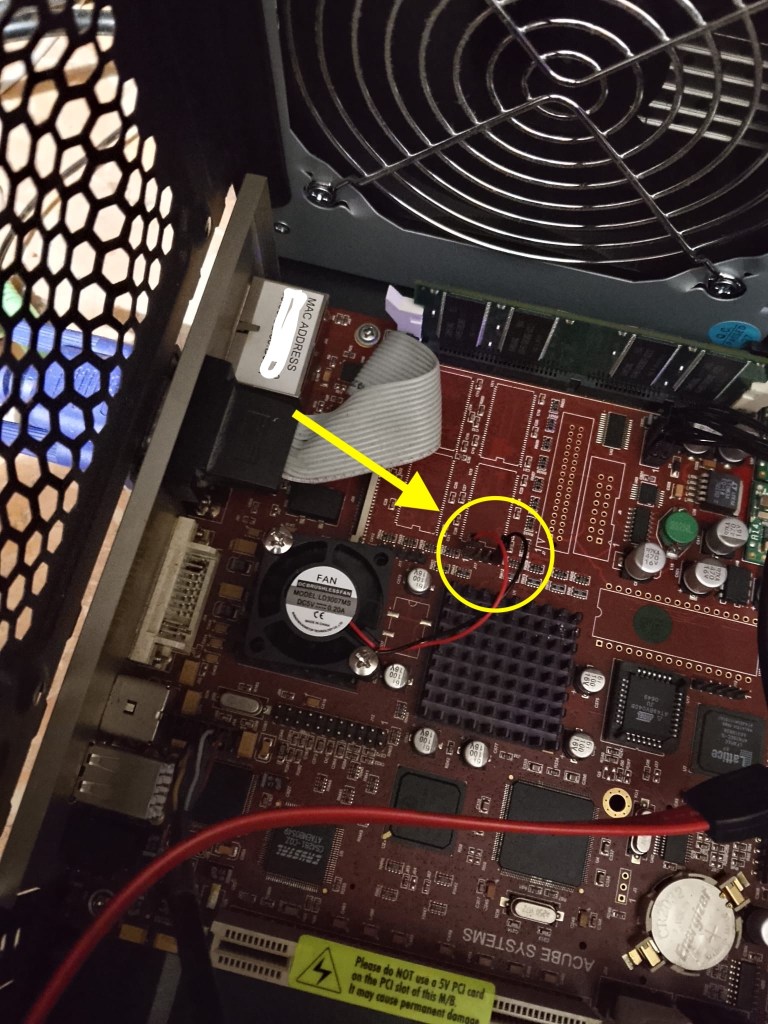
You can find the complete text over on their website:
Amiga Future Issue 178
Issue 178 (January and February 2026) of Amiga Future has been published.
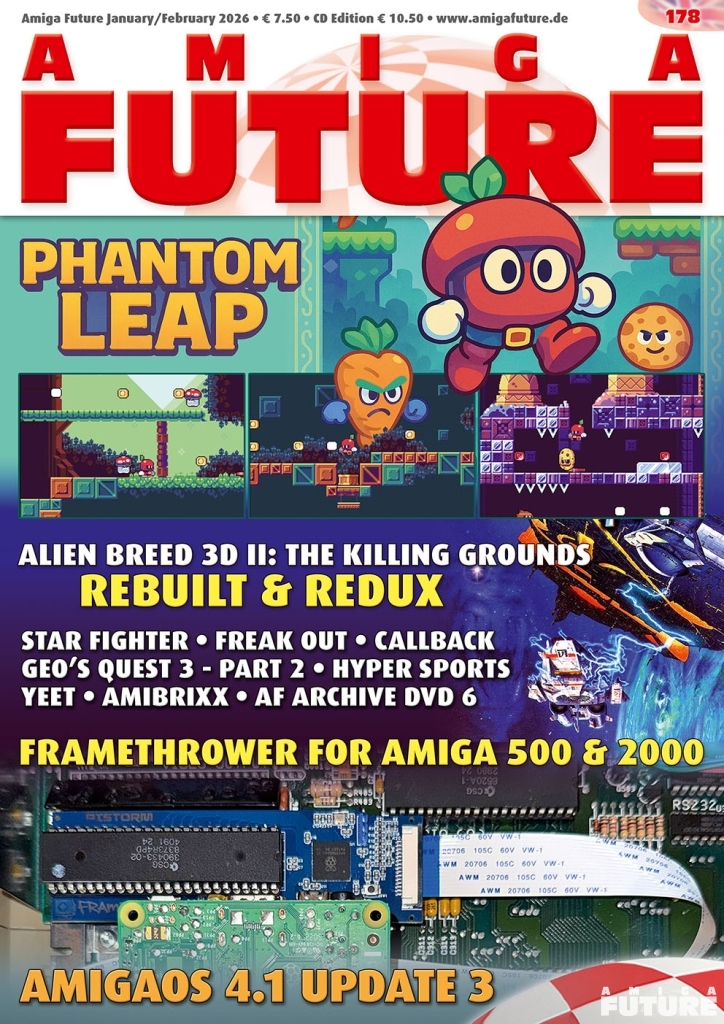
Here you can read a show report from Amiga 40 Mönchengladbach, an article about AmigaOS 4.1 Update 3, interviews with Bjørn Lynne and Allister Brimble, and much more.
https://www.amigafuture.de/app.php/kb/viewarticle?a=10934
Kickstart Expo 3.0
Amiga-news.de reports that the Kickstart Expo 3.0 has been announced! It will take place in the UK on August 7th-8th 2026.
https://amiga-news.de/en/news/AN-2026-01-00056-EN.html
New Calendar for 2026
They also bring news about the yearly calendar from the Croatian Amiga WARP Association:
https://amiga-news.de/en/news/AN-2026-01-00090-EN.html
YouTube
Amigame has uploaded a video where he does an unboxing of AmigaOS 4.1 FE.
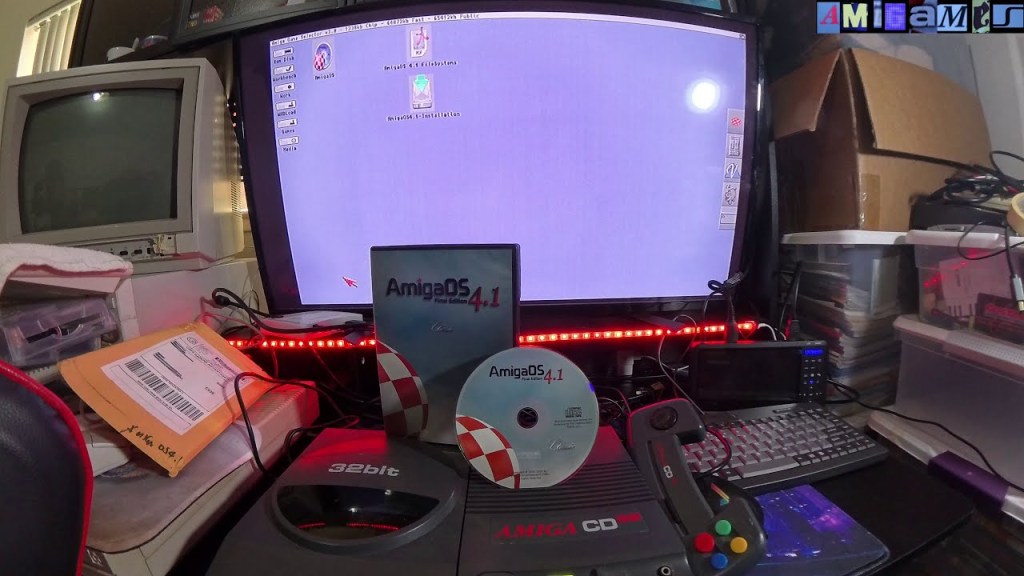
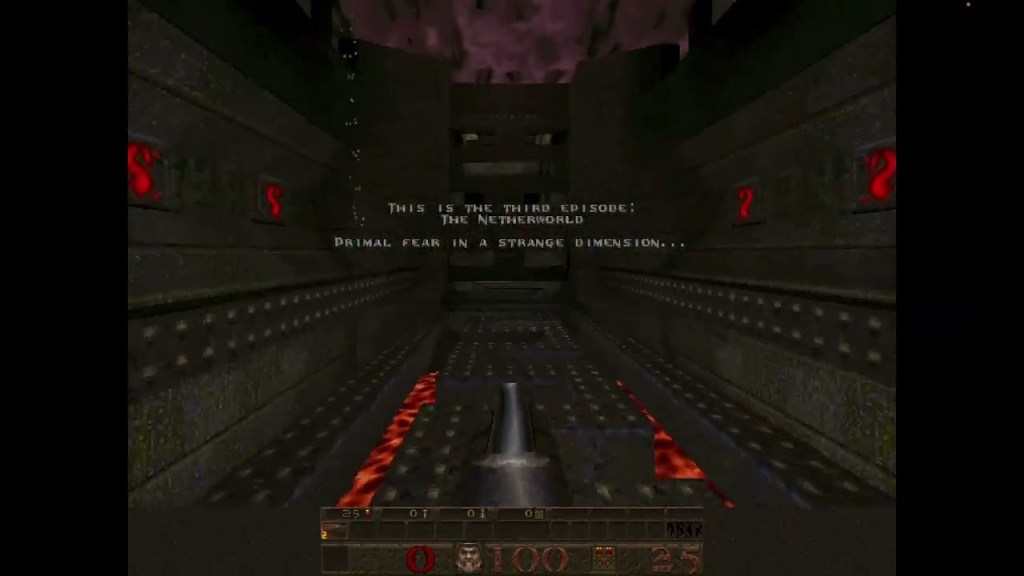
Marek Glogowski has uploaded many videos lately, one of them shows Chocolate Quake in action:
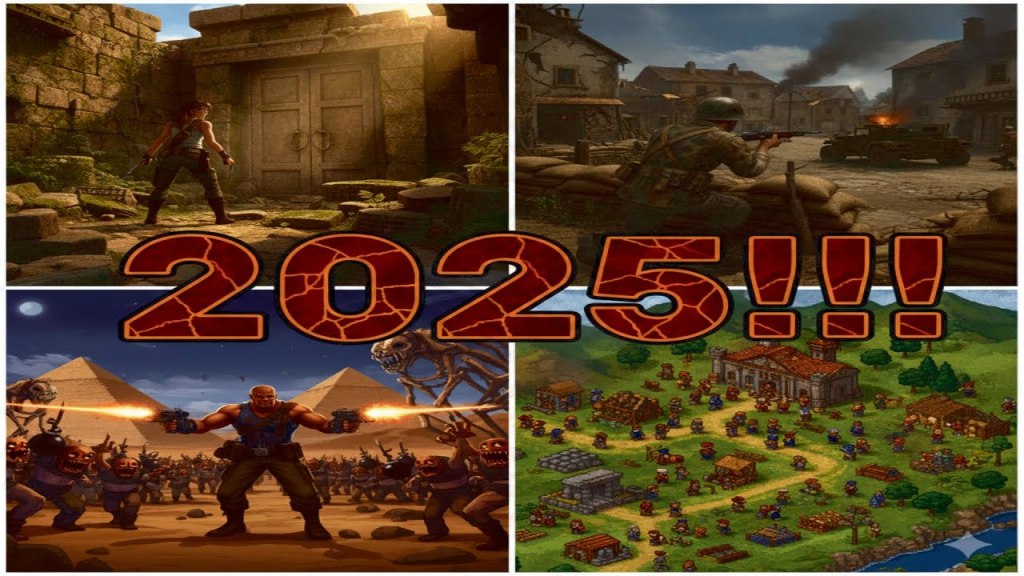
Here is a very interesting video about the top 10 games for AmigaOS 4 in 2025! The video has been created by Mufa. It is in Polish, but you can turn on auto-translation to another language if you want.
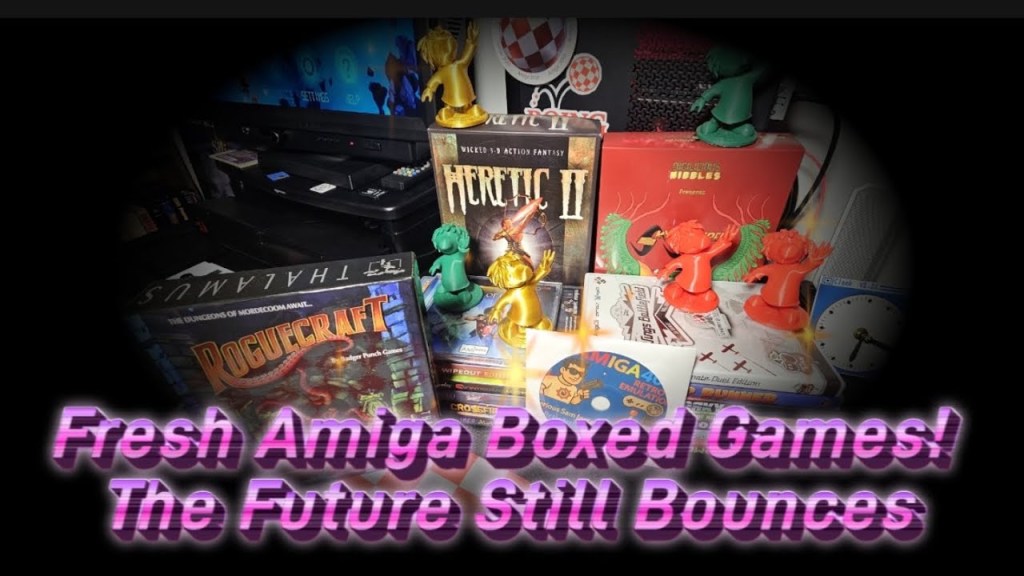
Ghettofinger Gaming has released a video showing his collection of original games, including Heretic II.
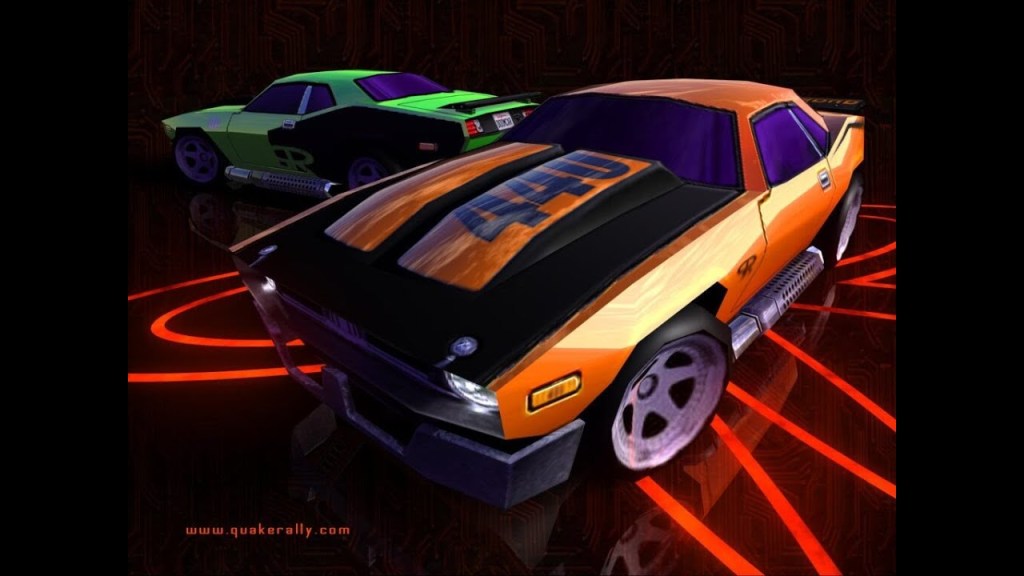
A video of Quake 3 Rally has been published by HunoPPC:
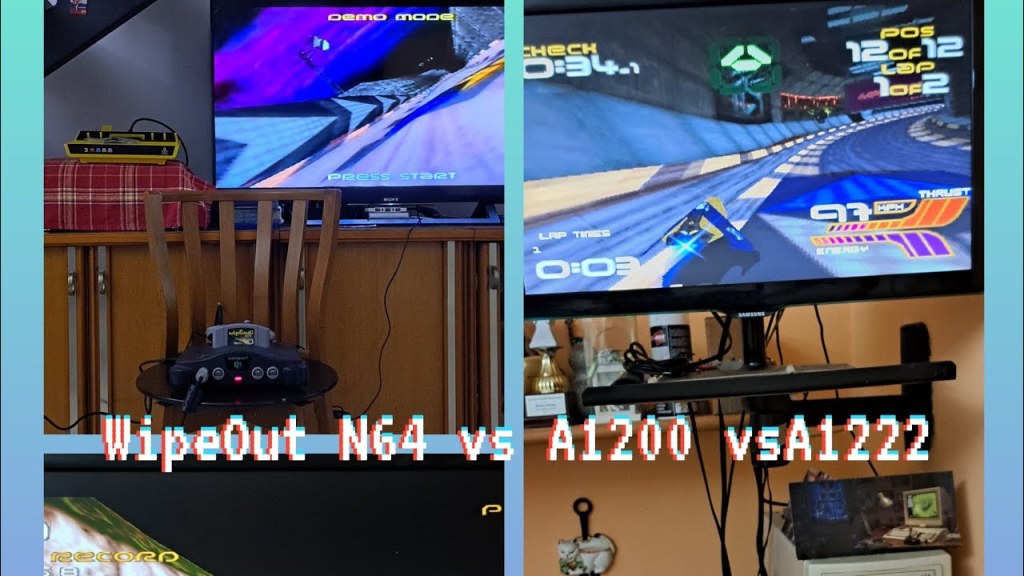
The Lost C is back, and with a great video! This one compares WipeOut on Nintendo 64, Amiga 1200 PPC, and AmigaOne A1222!
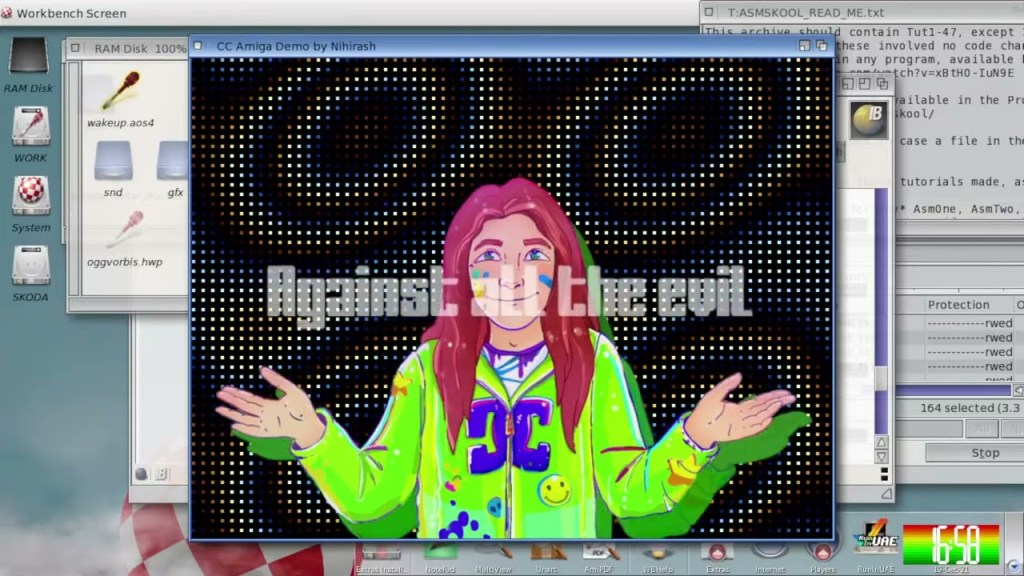
Hirudov has uploaded many videos to his YouTube channel lately. One of these shows the demo Wake Up.
Until next time
Thanks for reading, and see you in the next AmigaOS 4 Monthly Roundup! Hope you enjoyed this news summary. 🙂
I wish you all a great weekend!
All the best,
Puni – AmigaOne, Sam, and AmigaOS 4 enthusiast

 Old School Game Blog